
Most WhatsApp platform demos go the same way. Someone shows you the shared inbox, the chatbot, the broadcast tool. It all looks great. Then you sign up, and privacy never comes up at all.
It should, because the moment you connect a platform, it starts holding your customers’ names, phone numbers and entire conversations. Some of those chats include addresses, order details, sometimes things people would rather keep private. If the platform handles that badly, your customers won’t blame the vendor. They’ll blame you.
The good news is you don’t need to be a lawyer or a security expert to check this. You just need to know what to ask.
Remember who’s in the middle
WhatsApp itself protects messages while they travel. But a platform sits between you and your customer, and it usually keeps a copy of the chats so your team can see the history. So you’re not just trusting WhatsApp. You’re trusting whichever company you pick to sit in the middle. That’s what this checklist is for.
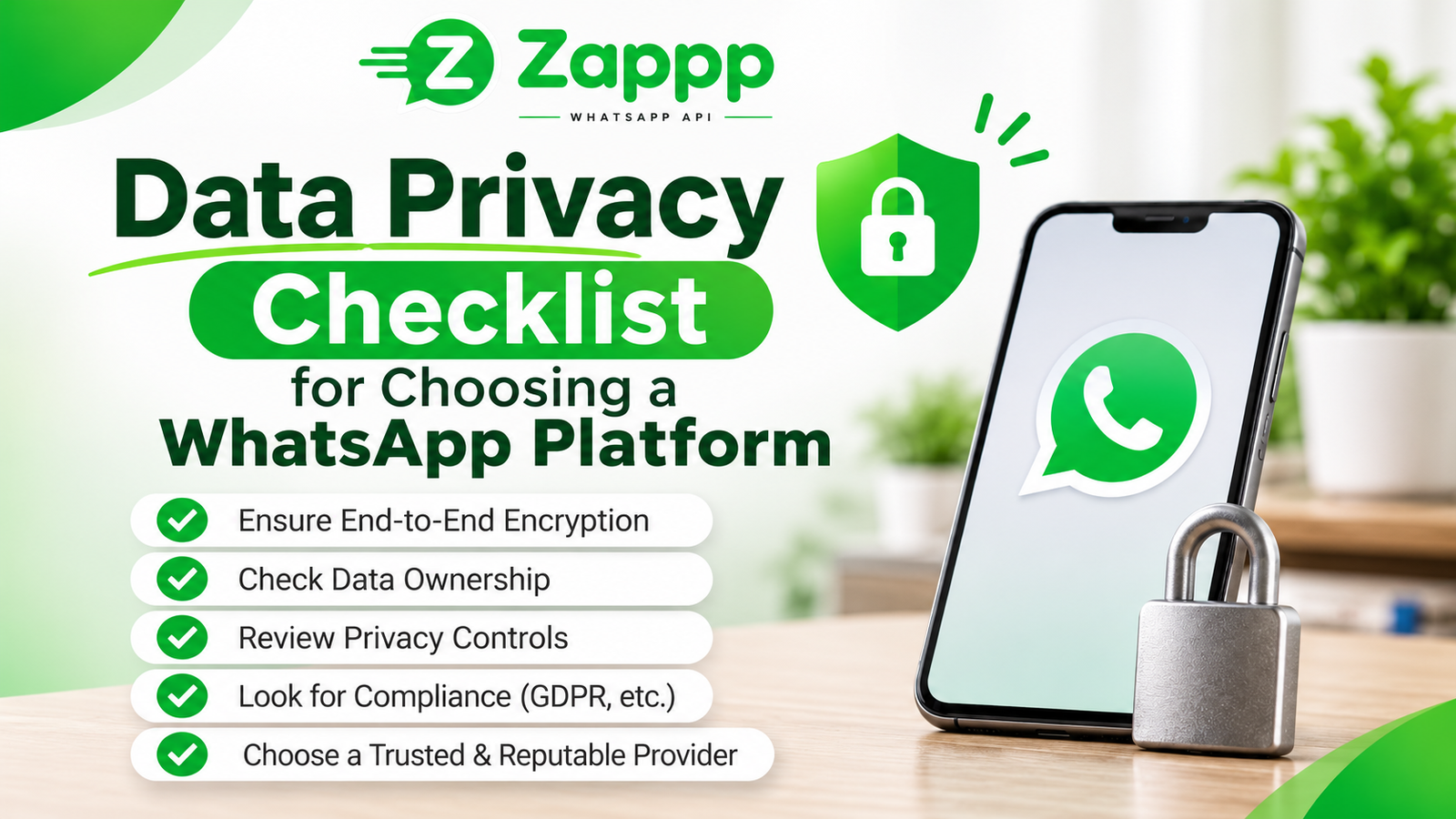
The 12 questions
1. Are they an official WhatsApp partner?
Ask them straight out. Be careful with tools that connect by scanning a QR code and copying your personal WhatsApp account. They go against WhatsApp’s rules, they can get your number banned, and nobody has properly checked how they handle your data.
2. Where is the data stored?
Ask which country or region your data sits in. Some laws, and some customers, care about this. If you serve people in the UK, EU or India, ask how data moving between countries is handled. A clear answer is a good sign. A vague one isn’t.
3. Will they sign a data processing agreement?
If you’re in the UK or EU, you’re expected to have a written agreement with any company that handles personal data for you. A serious vendor will have one ready. If they look confused when you ask, that tells you something.
4. Who else touches the data?
Platforms often rely on other companies for hosting, analytics, email or AI features. Ask for the list and how they’ll tell you when it changes. You have a right to know who ends up with your customers’ details.
5. Is the data encrypted?
Both while it travels and while it’s stored. You don’t need the technical detail. A good vendor will explain it in plain words and won’t dodge.
6. How is access controlled?
Not everybody on your team needs to see everything. You want different roles, so a new starter can reply to chats without being able to export your whole customer list. You want two-step login, a quick way to remove someone who leaves, and a log of who looked at what. If one shared password protects the whole inbox, walk away.
7. Can you decide how long chats are kept?
Ask how long they store conversations, whether you can set your own limit, and what happens when a customer asks you to delete their data. Can you do it easily, and does it really disappear?
8. Does it keep proper consent records?
If you send marketing, you need to show people agreed. Check that the platform records when and how each person opted in, and that opt-outs are respected automatically. It will save you a lot of stress later.
9. What happens to your chats if there’s AI involved?
If the platform has a chatbot or AI replies, ask directly: are our customers’ conversations used to train your AI, or shared with another AI company? Get the answer in writing. Some businesses don’t mind, plenty do, and it should be your call.
10. What’s their security record?
Ask if they hold independent certifications such as ISO 27001 or SOC 2, and whether they’ll share a summary of their latest audit. Then ask what they do when something goes wrong. How fast will they tell you? Rules often expect serious breaches to be reported quickly, so you can’t afford to hear about problems late.
11. Can you leave with your data?
Picture yourself a year from now, unhappy and wanting out. Can you export your contacts, chat history and consent records in a format you can use? A platform that makes leaving hard has thought a lot about keeping you.
12. Can you actually read their privacy policy?
Skim it. Does it say plainly what they collect, why, and who sees it? Or is it a fog of legal phrases? How a company writes about privacy tells you how seriously it takes it.
Red flags
Some things should make you pause straight away:
Pressure to sign before you’ve seen any security details
Nobody who can say who’s responsible for data protection
Big claims like “100% secure” with nothing to back them up
Unofficial ways of connecting to WhatsApp
No clear way to export or delete data
A refusal to put answers in writing
How to do this without losing a week
Pick two or three vendors and send them all the same twelve questions in one email. Ask for written answers and any documents, such as their data processing agreement. Then lay the replies side by side. The fast, clear and specific ones usually come from companies that take this seriously. The slow, fuzzy ones usually don’t.
Before you decide, ask someone you trust, a colleague or a legal adviser, to take a quick look. This article is general guidance, not legal advice, so if you handle sensitive data like health or financial details, get proper professional input.
A few quick questions
Are my chats still private if I use a platform?
WhatsApp protects messages in transit, but with a platform your messages are also handled and often stored by that platform. So its own security and policies matter a lot.
Do small businesses need to worry about this?
Yes. Privacy laws apply to businesses of every size, and customers care just as much about a small shop as a big brand.
If I only ask one question, which one?
Ask who can access your customer data, and how that access is controlled and recorded. The answer shows you quickly how seriously the vendor takes all of this.
Can I switch platforms later?
Usually, but it’s much easier if you’ve checked in advance that you can export your data.
Wrapping up
The best WhatsApp platform isn’t the one with the longest feature list. It’s the one you’d feel comfortable explaining to your own customers. Ask the questions, expect straight answers, and move on from anyone who can’t give them.
Want to see how we handle your data? Talk to our team and ask us anything on this list. [Book a demo]